
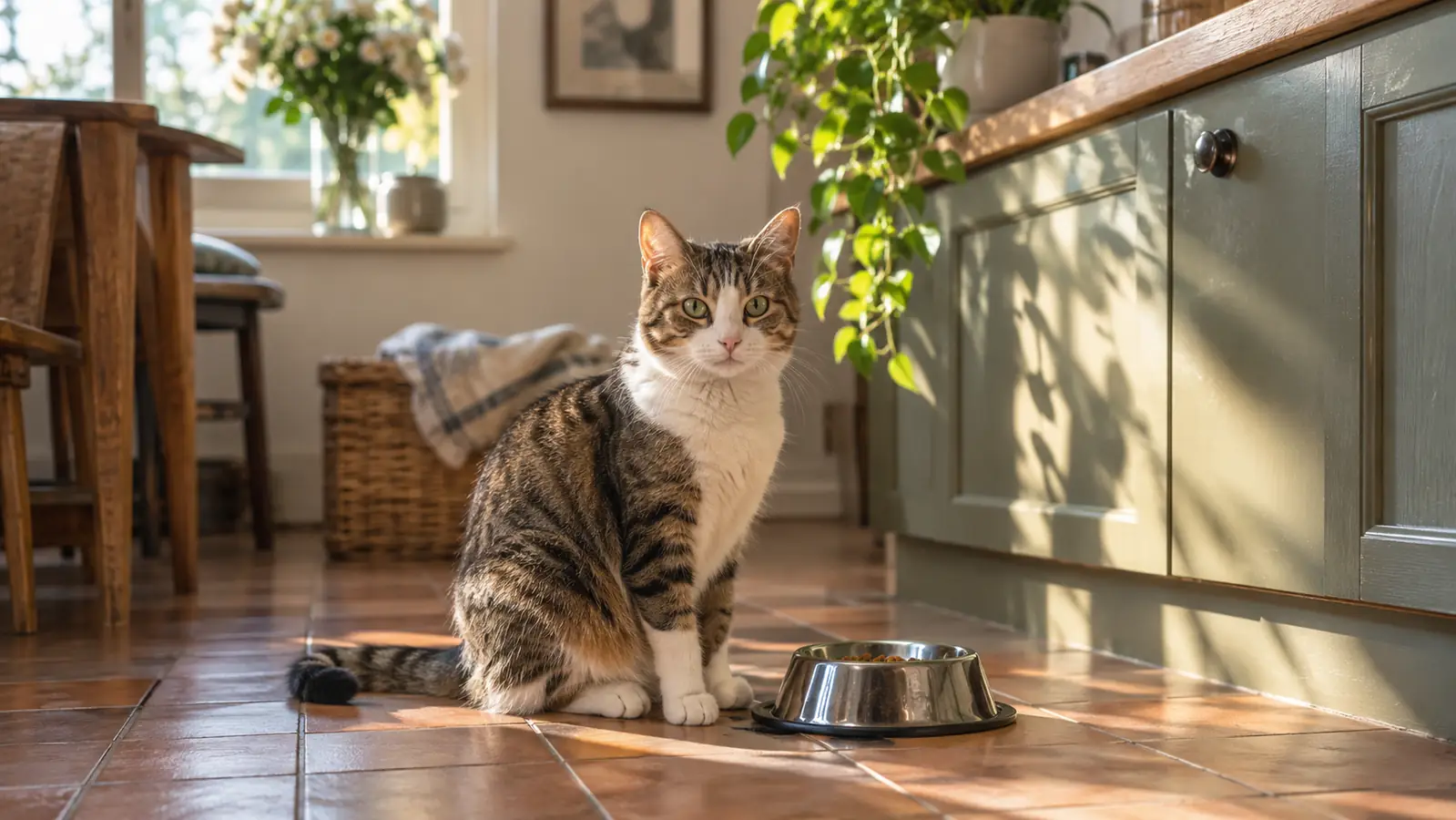
The first thing nobody tells you about FortiFlora is that it is not a treat. I opened the box expecting something Pepper would come running for. What I got was a small paper packet of plain powder, unflavored, that I was supposed to sprinkle over her food and hope she did not notice. She noticed.
That was nine months ago. Pepper is my 12-year-old gray-and-white domestic shorthair, about 11 pounds, indoor only, and she has had a touchy stomach her whole life. Our vet has brought up her water intake and her weight at the last two checkups. So when she wrote Pro Plan Veterinary Diets FortiFlora on a slip of paper and told me to try one packet a day for a month, I stopped at the pet store on the way home. I am the sort of person who does exactly what the slip of paper says.
What follows is not a press release. It is what I noticed, what I did not notice, and the handful of things I wish the box had said out loud. If you are standing in an aisle right now with a cat who has loose stools or a finicky appetite, some of this may save you a week of guessing.
The Quick Verdict
A plain powder packet that most cats will eat and that settled my cat's loose stools in about two weeks. It is not a fix for anything else, and it is wasted money if your cat refuses the food.
Amazon Check Today's Price →The Box Our Vet Wrote Down Before Anything Else
One packet a day, sprinkled over wet food and stirred in. That is the entire routine. Check today's price before you make the drive.
Amazon Check Today's Price on Amazon →How I've Used It, Start to Finish
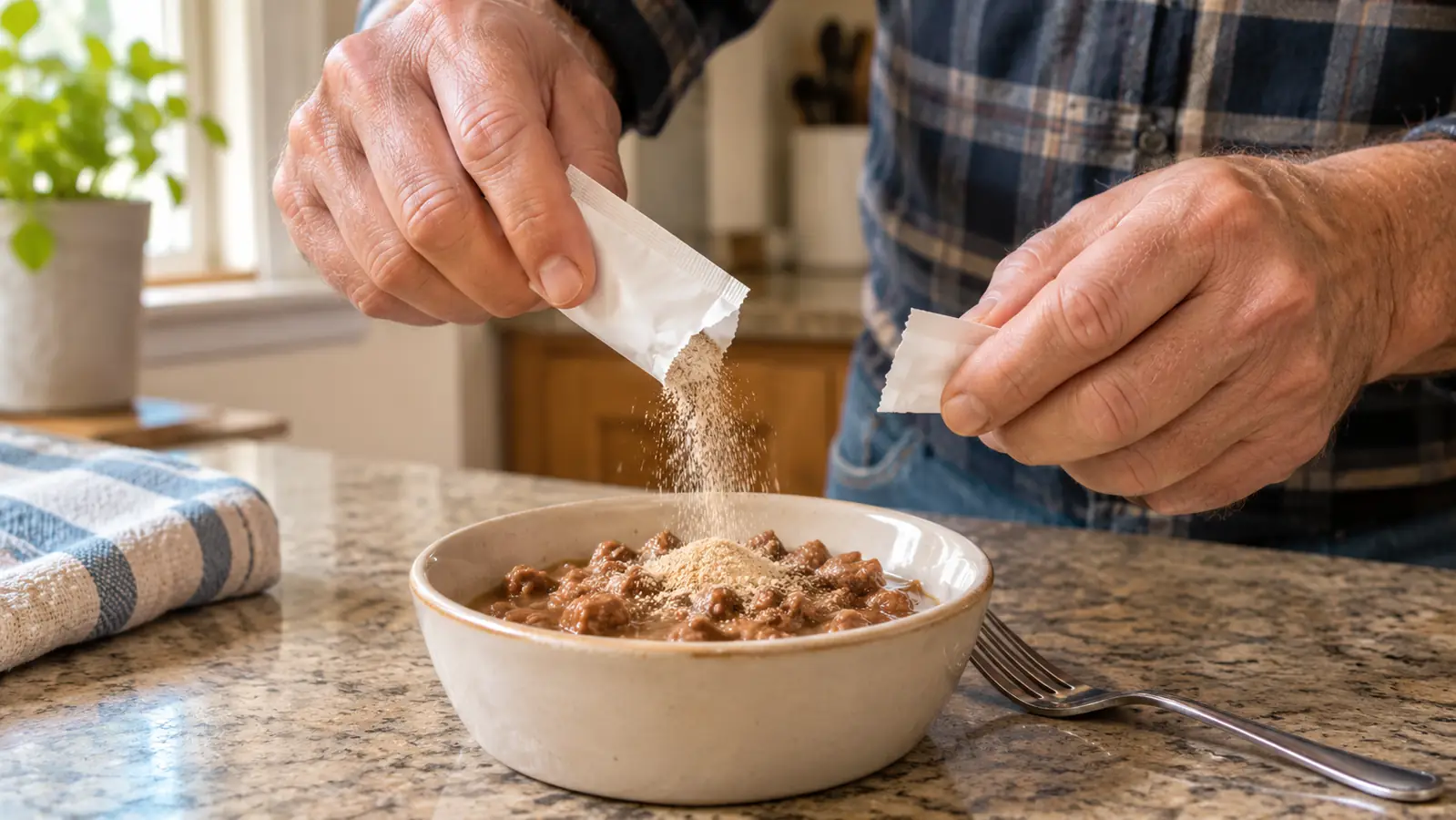
One packet a day. That is the whole schedule, and I want to say it plainly because plenty of cat supplements come with a routine you need a spreadsheet to follow. I tear open a packet at the same time every morning, right after I fill Pepper's water bowl, and I empty it over the top of her wet food. Then I stir it in with a fork, just a little. The first week I did not stir, and she ate a clean ring around the powder and left the rest.
I timed it once, out of curiosity. From cabinet door open to bowl on the floor was fifty-one seconds, and that included rinsing the fork. Not a hardship. But it is a thing you have to be home for, or a thing your husband has to remember. Ed and I had one small disagreement in week three about whether the packet had already gone into the bowl that morning. We could not tell by looking, because the powder disappears. Now the empty packet goes in a little dish beside the sink until I rinse it out, and if the dish is empty I know I have not done it yet. That dish has done more for my memory than any calendar reminder.
The packet itself is small and the powder is fine enough that it disappears into wet food once you work it in with a fork. The first one I opened went all over the counter because I tore it too fast. Now I tear along the dotted line and tap it out with one finger. Thirty packets to a box, one a day, so a box lines up with about a month if you are not wasteful.
I keep the box in the cabinet above the coffee maker. Not in the laundry room with the litter supplies, not in a drawer. If it lives somewhere I do not look, I forget it exists by Thursday, and then the whole routine falls apart.
Unflavored Does Not Mean Invisible
Unflavored on a label means they did not add a flavor. It does not mean your cat cannot tell. Pepper could tell. For the first three days she ate most of the bowl and left a rim of food around the edges where the powder had soaked in. She was not insulted. She was just not going to finish it.
Before I landed on the spoonful method, I tried three other things and all three failed. I stirred a packet into a whole can of food and let it sit covered in the fridge overnight, thinking the powder would dissolve. It did not dissolve, and cold food has less smell, and Pepper walked away from the bowl twice without tasting it. I sprinkled it dry over her kibble. She ate the kibble and left a small gray drift in the bottom of the bowl, which I found hours later when I picked it up to wash. Then I mixed it into a spoonful of the water from a can of tuna. That worked, and it worked for the wrong reason, and I did not want to teach an eleven-pound cat that every breakfast came with tuna juice. The plain spoonful of wet food was the only thing that still worked in week two.
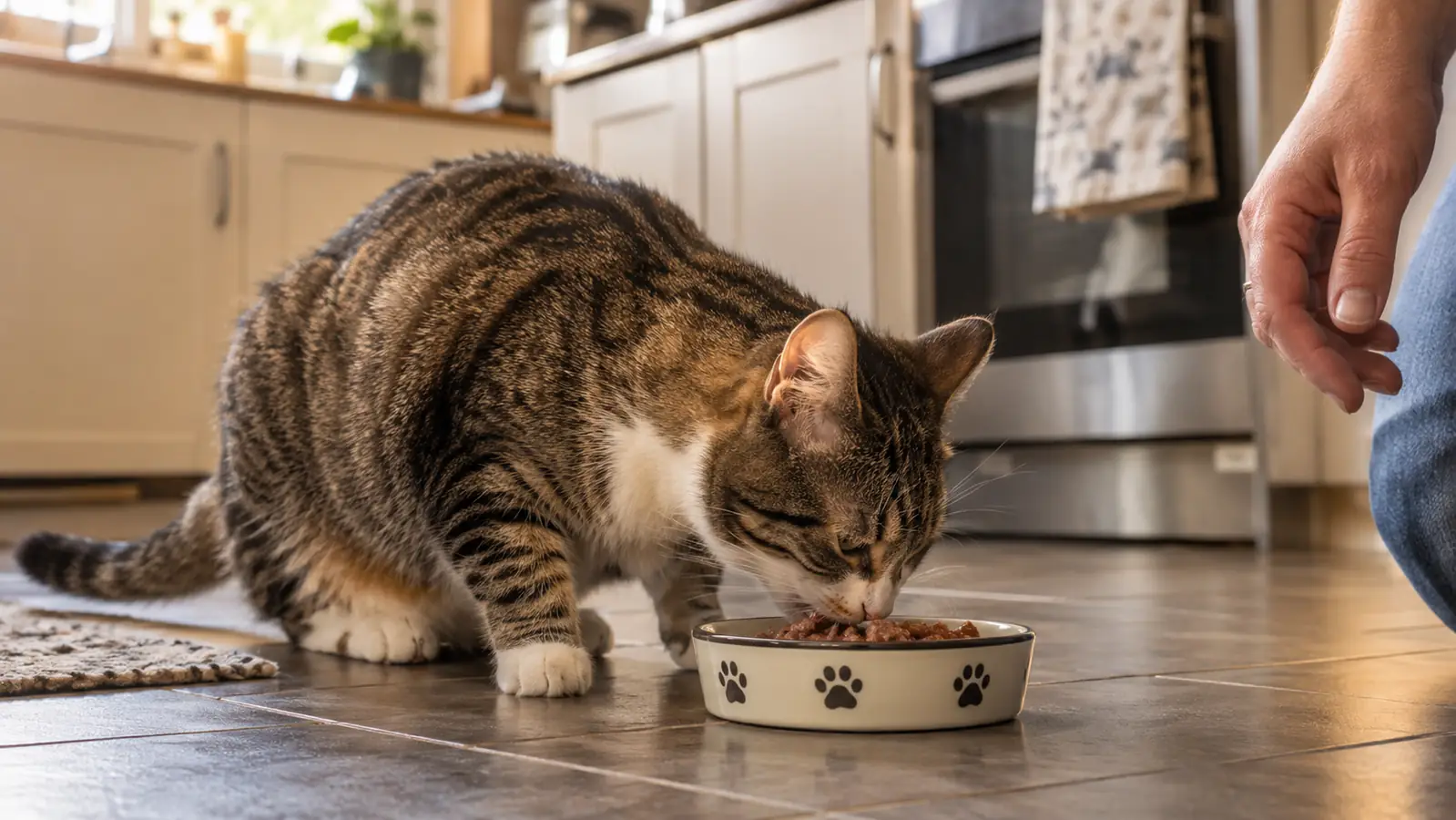
What fixed it for us was changing the vehicle, not the powder. I started mixing the packet into one spoonful of the wet food she likes best and setting that down first, before the rest of her portion. She eats the doctored spoonful while she is still interested, and by the time she reaches the plain food she has stopped paying attention. If your cat eats dry food only, I would dampen a few kibbles with warm water first and stir the powder through those. Dry powder on dry kibble settles at the bottom of the bowl and the cat eats around it.
I also tried it on a saucer by itself, once. That was a failure and I do not recommend it. A cat will not eat plain powder off a plate, and mine looked at me as though I had lost my mind.
What Is Actually in the Packet
The label lists Enterococcus faecium SF68, which is the strain, and taurine at 5 mg. That is basically it. No flavoring, no strong smell, nothing that turned her off by scent alone. It is a single-strain probiotic rather than a broad blend, and I have since learned that is a deliberate choice and not a corner cut. Plenty of blends throw six strains at a cat and hope one of them sticks.
I am not a veterinarian and I am not going to read you a lab report. What I can tell you is that our vet picked the Pro Plan Veterinary Diets powder on purpose after I asked about a cheaper tub on the shelf. Her answer was that this is the one with the research behind it, and she would rather I use one thing that works than three things that might. I have no way to check that beyond trusting her. I do trust her, which is why the box is still in my cabinet.
The taurine is worth a sentence. It is one of those things cats cannot make enough of on their own, and it is tied to heart and eye health as they get older. Five milligrams is a small amount and I would not buy the box for that alone. But it is a good thing to see on a label you are already reading once a day.
Two Weeks, Then Six, Then the Four Days I Ran Out
The first change I noticed had nothing to do with her stomach. Around day ten, Pepper started meeting me at the kitchen door in the morning. She had not done that in a year. I do not think a powder did that. I think she started associating the kitchen with a warm spoonful of wet food, and the bounce came along with it. I am telling you this because I do not want to sell you a picture of a cat who suddenly leaps onto the countertops. She does not.
Let me put dates on it, because vague timelines were the thing I could not find anywhere when I was searching at eleven o'clock at night with a flashlight. We started on a Saturday. Day four, a Tuesday, there was nothing I could point to and I had already decided it was not working. By day nine I thought I was imagining the improvement, and I wrote soft but formed in the little calendar square, which is not a sentence I ever expected to write in a calendar. Day thirteen was the first morning I opened the laundry room door and found nothing to clean up. I remember that date for an unrelated reason, because it was the morning the furnace man arrived and I had forgotten he was coming and answered the door in my robe.
The litter box change was real, though. We had reached the stage where I was checking it every morning the way other people check the weather. By the end of the second week the mess had mostly stopped. By the end of the fourth week I had stopped thinking about it at all, which is the highest compliment I can pay any product. Nothing dramatic happened. It was a slow return to normal.
At the six-week mark I ran out and did not reorder for four days because I was busy and it slipped my mind. By day three the loose stools were back, and I was back to checking the box every morning. That taught me more than the first whole month did. Whatever the powder is doing, it is doing it while you use it, and it stops when you stop. Nobody in the store explained that to me, and I would have liked to know.
What It Helped and What It Did Not
It helped the loose stools. That was the main event and it is why I keep buying it. It may have helped her appetite a little, though I cannot separate that from the wet food routine we built around it. Her coat looks the same as it always did. Her weight has not moved, which our vet says is fine but wants to keep an eye on.
It did not fix her picky drinking. I still put out three water bowls in three rooms and I still catch her drinking from the bathroom sink when she thinks I am not looking. It did nothing for her teeth, which is a separate conversation we are having with the vet this fall. And it did not turn her into a calm, easy cat. She is still Pepper. She still yells at me at ten to six in the morning.
The other thing it did not do is work on the first day. If you are reading this late at night with a cat who is having a bad week, understand that this is not an overnight product. It took us the better part of two weeks before I could honestly say anything had changed.
What a Box Actually Asks of You
Beyond the routine, the Pro Plan Veterinary Diets box asks for patience and a little waste. Thirty packets is thirty days, which sounds tidy until you count the mornings your cat refuses the food and you scrape a serving into the bin. In our house that was about four servings in the first month, all of them in the first ten days. Once we settled on the spoonful method, the waste stopped. Four servings is not a tragedy, but if you are on a tight budget it is worth knowing that the learning curve costs you a few days of product.
The other thing it asks is that you not change everything at once. I made that mistake years ago with a cat before Pepper, when I switched her food, added a supplement, and moved the litter box in the same week, and then had no idea which change had helped or hurt. This time I changed one thing. The food stayed the same, the litter stayed the same, the water bowls stayed where they were. That is the only reason I can tell you with any confidence that the powder was the difference.
The paper packets add up too. Thirty little foil-lined envelopes a month is not nothing, and I notice it more than I expected to. I have no clever answer for that. I mention it because I would rather know a thing like that before I start than discover it four months in.
One practical note on ordering. I buy single boxes now rather than a bundle, even though a bundle would save me a trip, because I want the option to stop if something changes. If your cat does well for three months, order bigger. Not before.
What I Liked
- Plain, unflavored powder that stirs into wet food without changing the smell
- One packet a day, no scoop, no measuring, nothing to wash
- Loose stools settled in about two weeks for our cat
- A single strain with research behind it, which is why our vet picked it over the tub on the shelf
- Thirty packets to a box, so the count lines up with a month
Where It Falls Short
- Cats can absolutely taste it, and some will refuse a bowl they used to finish
- Nothing happens in the first week, which is hard to sit through
- The problem came back within three days when we ran out
- Thirty foil-lined packets a month is a lot of packaging
- Does nothing for vomiting, teeth, water intake or weight, no matter how much you hope
By the end of the fourth week I had stopped thinking about the litter box at all, which is the highest compliment I can pay any product.
Who This Is For
This is for the owner of a cat with a sensitive stomach who has already had the vet conversation. If your cat has loose stools that come and go, if the vet has ruled out the frightening possibilities, and if you can give it a full month before you judge it, this is a sensible thing to try. It is also for the person whose vet wrote it down on a slip of paper, which is most of us.
It suits people who do better with a routine than with a decision. I do not have to think about whether to give it. It is one packet, at the same time, in the same spoonful, and then I get on with my morning.
Who Should Skip It
Skip it if your cat has thrown up more than once, if there is blood, if she has stopped eating, or if she is losing weight. Those are vet visits, not supplement decisions, and no box of powder is going to sort them out. Skip it if your cat eats dry food only and will not touch wet food or dampened kibble, because you will be fighting the delivery more than the problem. And skip the three-box stock up until you know your cat will eat it. I bought one box first and I am glad I did.
What I Would Tell You Over the Fence
Buy one box, not three. Give it two full weeks before you decide anything, and keep a note on the calendar, because you will not remember what the litter box looked like ten days ago. Ask your vet first, always, especially if your cat takes any other medication or has a diagnosed condition. And if your cat refuses it, do not force it down. There are other options and the vet can point you toward them.
Nine months in, the box is still in my cabinet above the coffee maker. I still tear one open every morning after I fill the water bowl. Pepper still notices. She just does not care anymore. That is about as good as it gets with a cat.
One Packet a Day, and a Full Month Before You Judge It
Start with a single box of 30 packets. Keep notes for two weeks and let the litter box tell you the rest. Check today's price when you are ready.
Amazon Check Today's Price on Amazon →