
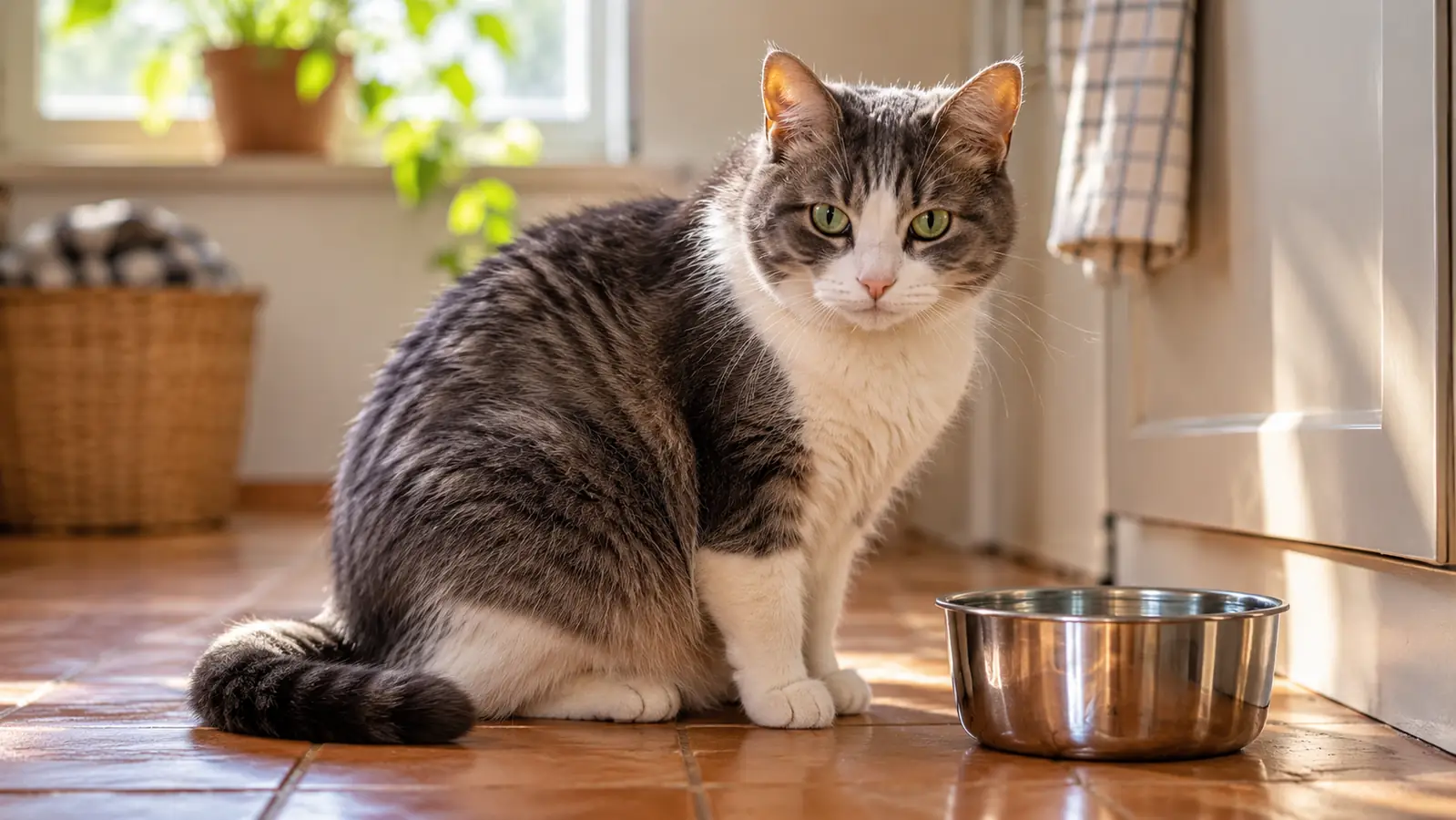
Pepper turned twelve this spring. She is gray and white, about eleven pounds, indoor only, and she has never had a reason to chew on anything tougher than her own dinner. At her last checkup our vet lifted her lip, looked at the gumline along her back teeth, and said we should start paying attention to her mouth now, while the problems are still small. She said it the way you would mention a leaky gutter. Not an emergency. Just the kind of thing that gets worse if you leave it.
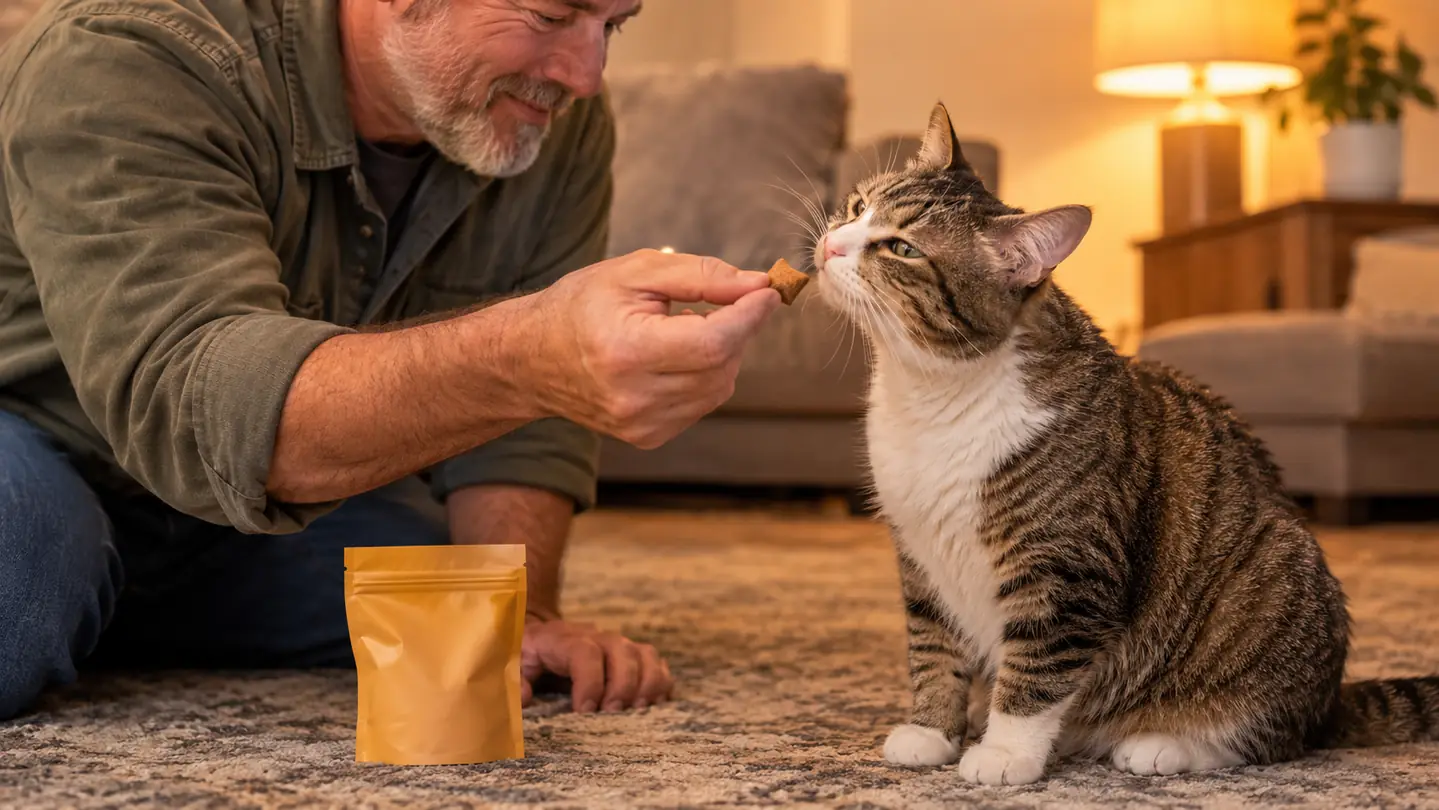
So I bought a cat toothbrush, a tube of poultry toothpaste, and a pack of dental wipes, and made a fool of myself on the kitchen tile for four days. Pepper treated the toothbrush like a wasp. The wipes went the same way. The water additive sat untouched, because Pepper is a picky drinker and can taste a change from across the room. What finally worked was the least ambitious thing on the list: a pouch of Greenies Feline dental treats, roasted chicken flavor, given at the same time every evening, in the same spot, with me sitting on the floor beside her.
The Only Step in This Routine the Cat Enjoys
Greenies Feline dental treats are the crunchy part of the plan, the part Pepper comes running for. Everything else in this article is work. This part happens on its own once you pick a time and stick to it.
Amazon Check Today's Price on Amazon →Step 1: Have Your Vet Look Before You Buy Anything
I know that is not the answer you came for. You came for the treat. But a crunchy treat cannot fix a tooth that is already broken, and cats are very good at hiding mouth pain. Pepper had been eating a little more slowly for months and I had blamed her age. Our vet found tartar along the gumline, gums that were starting to look angry, and one tooth she wanted to keep an eye on.
That appointment gave me two things. A baseline, so I could tell six weeks later whether anything had changed. And a clear picture of what I was dealing with, which was not a crisis. It was a maintenance job, and maintenance jobs are the ones you can actually do something about at home.
Ask your vet directly whether your cat's teeth are healthy enough for a crunchy treat. If there is a loose tooth, a cracked tooth, or a mouth that is already sore, crunching is the last thing you want to introduce. Ours gave the go ahead and reminded me that treats do not replace a professional cleaning if one is due. Also worth asking: whether one is due at all. That is a bigger conversation for an older cat, and it is one to have with your vet and not with me.
Step 2: Read the Pouch and Put the Treats Inside Her Calories
Feline Greenies are wafers, not soft chews, and that difference is the whole point. A soft treat does nothing for a cat's teeth except add calories. The wafer is crunchy on purpose, and the crunch is the mechanism: when she bites down, the texture works at the surface of the tooth and along the gumline. The package describes clinically proven oral care, says the crunchy texture supports a 36% reduction in tartar, and notes it is the number one veterinarian recommended treat for cat dental care. I am not a vet. I am repeating what the label says and what our vet did not argue with.
What our vet did say is that a treat is still food. Pepper is about eleven pounds and lives indoors, so she is not burning much of anything. At her checkup I was told to watch her weight. So the Greenies came out of her daily calories instead of going on top of them. I fed her a little less at her evening meal and gave the difference back as treats. That is not a diet tip, it is arithmetic, and it is the reason a twelve-year-old cat can have something nice every night without her waistline noticing.
Pepper has a sensitive stomach, so I introduced them slowly, one the first night, two the next, rather than handing her a fistful and hoping. The pouch is 4.6 ounces, which for one small cat is close to a month of evenings. It lives in the cupboard above the coffee maker, which is high enough that I am not in it twenty times a day.
Step 3: Pick a Time and Keep It Dull
The routine works because it is boring. Pepper gets her treat at the same time every evening, after her wet food, on the tile in front of the kitchen counter. Same spot, same order, same person. Cats are small conservatives. Once she knew the sequence she started waiting for it, and a cat who is waiting for the treat is a cat who is not hiding under the stairs while I chase her with a toothbrush.
The mistake I made in the first week was handing it to her while she was half asleep on the landing. She swallowed it whole. A wafer that goes down whole does no more for her teeth than her regular dinner does. So now she gets one at a time, on the floor, and I stay until it is finished. If your cat gulps, try one treat, then a pause, then the next. It is not a training program. It is just slowing her down enough that her teeth meet the thing.
Watch how she chews, too. If she works one side of her mouth every night, or drops the treat, or starts and then walks away, make a note and mention it at your next visit. That is exactly how I found out Pepper had a sore spot on the left. She never once complained. She just quietly changed sides.
There is a second job this routine does without trying. Pepper does not miss a treat. Ever. So on the rare evening she sniffs it and walks away, I know something is off before I would have noticed anything else. A picky cat who turns down the one thing she loves is telling you something. Twice this year that has bought me a vet call I would otherwise have put off until Monday.
A wafer that goes down whole cleans nothing. The crunch is the job, which is why I sit on the kitchen floor and wait for her to finish.
Step 4: Sort the Water Before You Sort Anything Else
Pepper is a picky drinker and always has been. Our vet brought up water intake at that same checkup, mostly because of her kidneys, but a dry mouth is also a mouth where things settle in. So the water side of this routine matters as much as the treats, and it costs almost nothing.
Three things helped. I put a second bowl upstairs on the landing, because Pepper is lazy about stairs in the afternoon. I swapped her deep bowl for a wide shallow one after noticing she drank more out of a saucer than out of the bowl. And I change the water twice a day, which sounds obvious and which I was absolutely not doing before.
Ask your vet if you are worried about how much your cat drinks, and especially if the amount changes suddenly. A cat that starts draining the bowl is a vet call, not a bowl problem. That is the one thing in this article I would not tinker with on my own.
If your cat barely touches water at all, ask about wet food, because a lot of intake comes from the food and not from the bowl. Pepper gets wet food twice a day and I stir a spoonful of water into it. She has not noticed yet. I will deny writing that if she asks.
Step 5: Look in the Mouth Once a Month
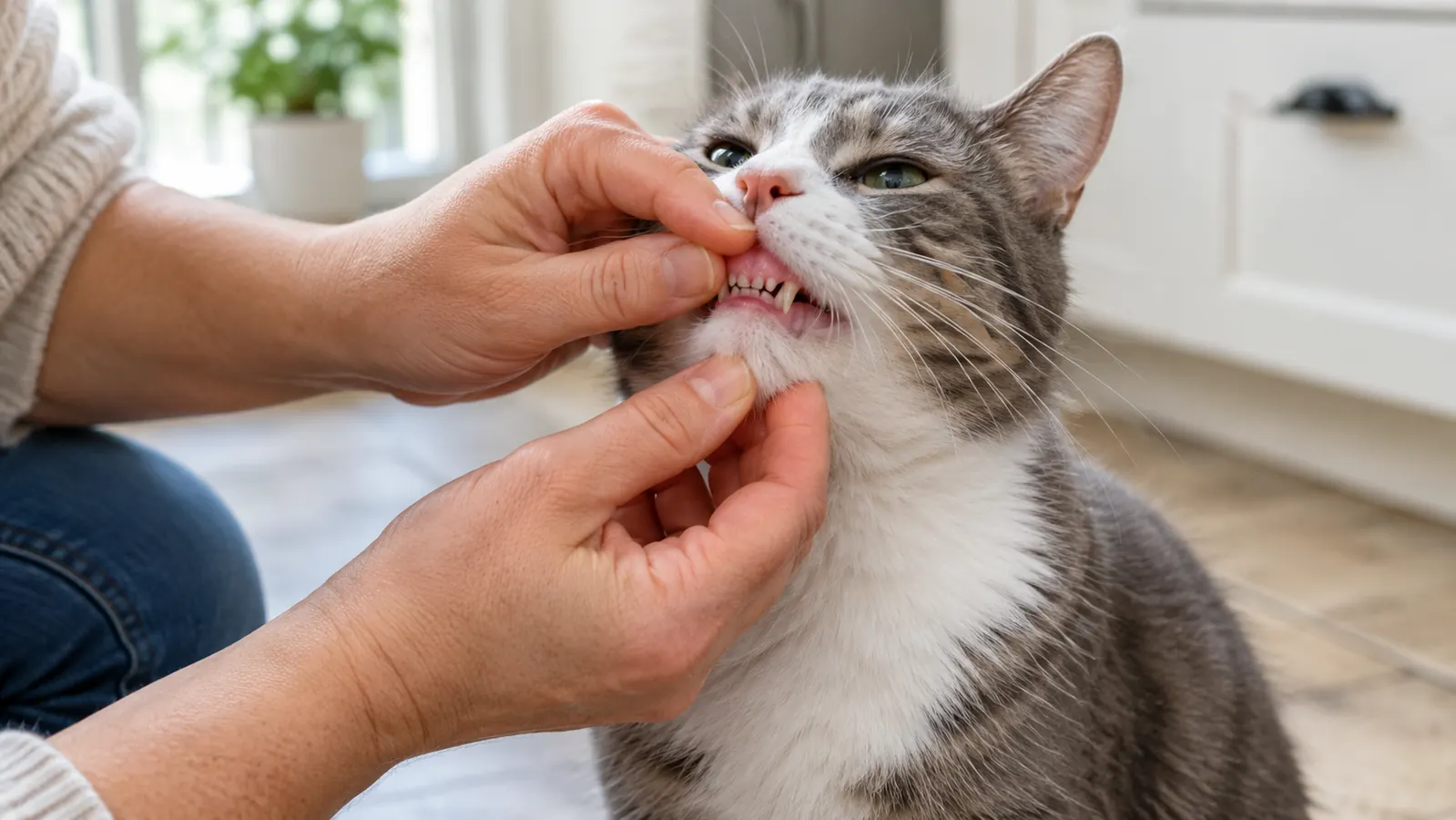
Once a month I sit on the kitchen floor with Pepper in my lap, lift her lip, and look. I am not diagnosing anything. I am looking for change, and a monthly look means I actually know what normal looks like for her.
What I check: brown buildup along the gumline, gums that look red or puffy instead of pale pink, breath that has changed, drooling, pawing at the mouth, eating on one side, dropping food, flinching when I touch her cheek. Any of those earns a note on the calendar and a phone call. Cats are built to hide mouth pain, and by the time one stops eating, the problem has usually been there a while.
I also ask about a professional cleaning at every checkup now, and I ask real questions about it, because Pepper is twelve and anesthesia in an older cat is not nothing. Our vet walked me through bloodwork first and what she would want to see before putting her under. I would rather have that conversation every year and be told we are fine than skip it and find out later that I was not paying attention.
What Else Helps
Brushing is still the best thing you can do for a cat's teeth, and I am not going to pretend otherwise. Some cats tolerate it. Pepper does not, and I decided a nightly fight was worse for both of us than a nightly wafer. If your cat will sit for it, start with a finger and cat toothpaste, never human toothpaste, and go slowly. Dental wipes are the next best thing if she will allow it. Some cats also do well with a water additive, though mine can taste anything from across the room.
Beyond that: keep an eye on her weight, since a lighter cat is easier on her joints and her heart. Look at the other treats in the house, because the soft ones and the crunchy kibble are all calories and none of them scrub. And keep a small note somewhere, on the calendar or in your phone, of what you saw and when. Vets ask better questions when you have dates. Ours certainly does.
One more thing and then I will get off my soapbox. Greenies are a treat, not a cleaning. I still expect our vet to find tartar. I still expect to have the anesthesia conversation again next spring. What changed is the in between: her breath is easier to sit near, her gums look less angry at the monthly check, and she has something to look forward to at six fifteen. For a twelve-year-old cat and a sixty-three-year-old woman, that is a decent return.
Start Tonight, Not After the Next Checkup
One pouch, one time a day, one cat who comes running instead of hiding. Pick a time, put the pouch in the cupboard, and give it six weeks before you decide anything. That is exactly what we did.
Amazon Check Today's Price on Amazon →