
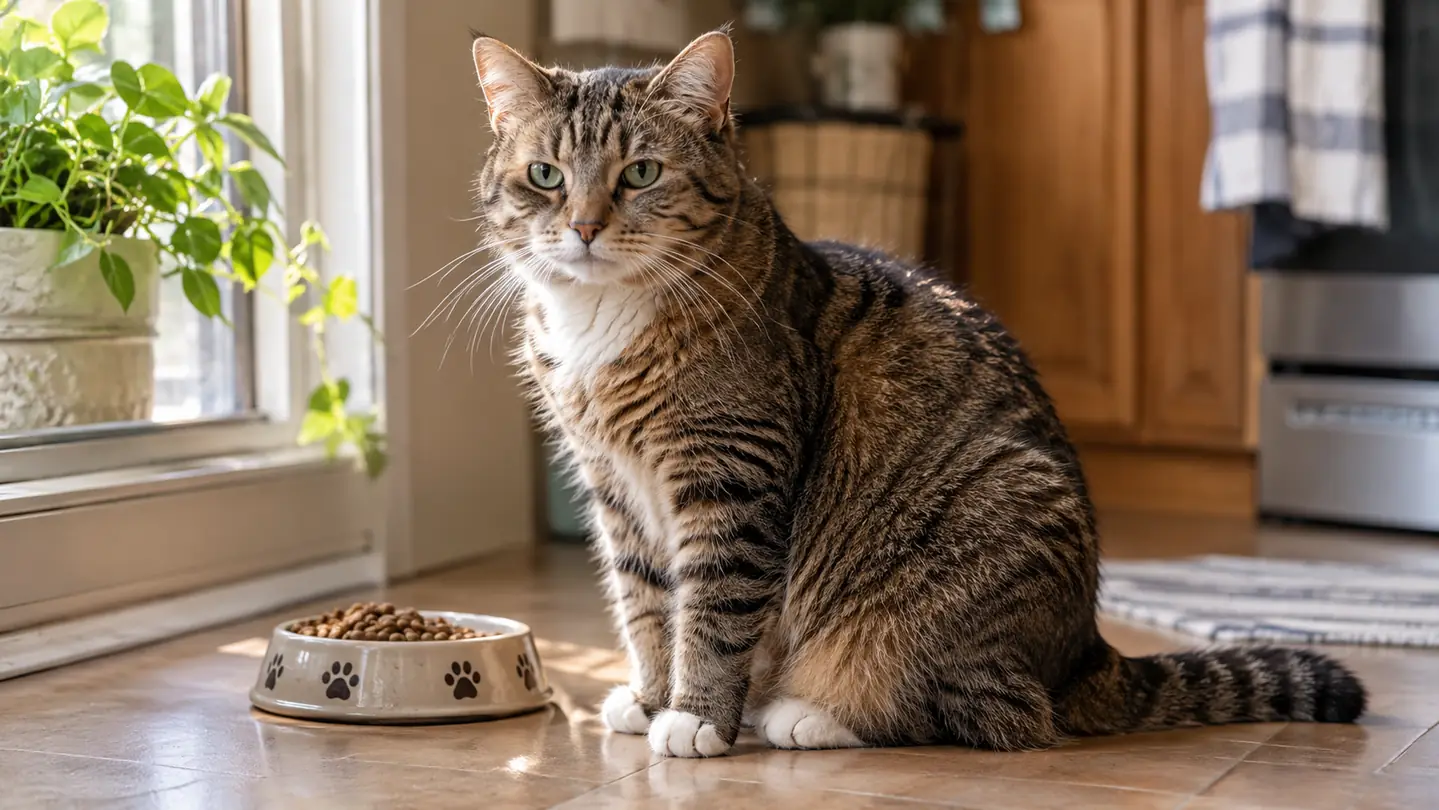
Pepper threw up on the upstairs carpet at ten past six on a Tuesday morning, and I stood there in my robe with a roll of paper towels thinking, this cannot be the next five years of our life. She is twelve years old, gray and white, about eleven pounds, indoor only, and until last year she had never been a sick cat. Then it started. Not hairballs exactly, just food, sometimes four hours after she ate it, sometimes on the kitchen tile where I had to get down on my knees with the spray bottle and a sponge.
Our vet ran bloodwork, felt her belly, looked at her teeth, and asked two hundred questions about what she eats and when. Everything came back boring, which is the answer you want and also the answer that helps you least. She is not a young cat anymore. Her stomach has gotten fussy the way an old stomach does. That was the week I first heard the words Pro Plan Veterinary Diets FortiFlora, said out loud by our vet in a perfectly normal voice, as if it were no big deal. It is a probiotic powder for cats, unflavored, thirty servings to a box.
The powder our vet named before she named anything else
Pro Plan Veterinary Diets FortiFlora is a daily probiotic powder for cats with digestive and immune support in mind. Unflavored, thirty servings to a box, and easy to stir into food your cat already trusts. Ask your vet first, then start slow.
Amazon Check Today's Price on Amazon →Step 1: Rule Out the Medical Stuff Before You Buy a Single Box
I want to be honest about the order of operations, because I got it wrong first. My instinct was to open the laptop and buy something. A powder, a food, a fountain, anything with a picture of a cat on it. Our vet's instinct was to make sure nothing else was going on. She wanted bloodwork before supplements, and I am glad she did, because a probiotic cannot fix a thyroid or a blockage or a bad tooth, and all three of those look exactly like a stomach problem from where the owner is standing in her robe.
The rule she gave me is worth repeating. If a cat is vomiting every day, losing weight, or refusing food, that is a vet visit and not a shopping trip. If a cat is otherwise bright and eating, and the trouble comes and goes, then you are probably looking at the ordinary sensitive stomach an older cat develops, and that is where something like Pro Plan Veterinary Diets FortiFlora enters the conversation. Pepper's bloodwork was fine. Her weight was up half a pound, which the vet noticed and I had not.
What she wanted me to watch going forward was the same three things she has been saying for two years. Weight, teeth, water intake. I wrote them at the top of the notepad that still lives on the fridge, and I would suggest you do the same, because that notepad turned out to matter more than I expected.
There is one more piece of the ruling-out that surprised me. Our vet asked what Pepper eats and then asked me to bring the bag. I brought the bag. She read the feeding chart on the back and raised an eyebrow, because the amount I had been giving was for a cat heavier than Pepper is. Nobody had ever told me that a chart on a bag is a starting point and not a law. We adjusted it, and that alone changed how Pepper looked by the evening.
Step 2: Change One Thing at a Time
I am a retired school librarian. I like a system. When Pepper started having trouble, I wanted to change her food, add a probiotic, buy a water fountain, and switch her treats, all in the same week, because I wanted it fixed by Sunday. Our vet said no, and she said it in the flat voice she uses when she is not going to argue about it.
Here is why. A cat's gut is slow to settle and slow to complain. If you change four things at once and the vomiting stops, you have no idea which of the four did it, so you cannot repeat it, and you cannot stop paying for the three that did nothing. If it gets worse, you have four suspects and no way to sort them.
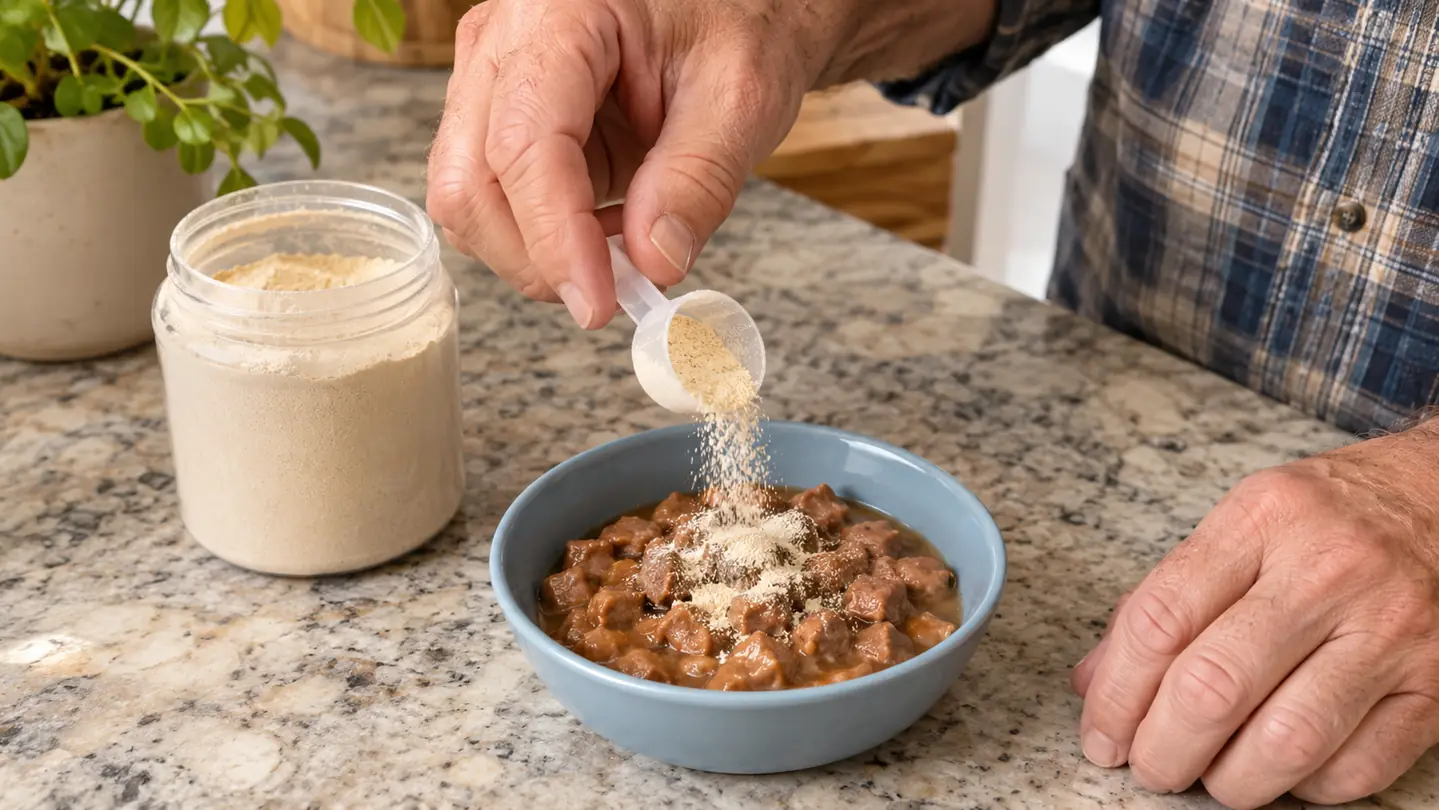
So we kept her food exactly as it was and added one thing. That was the powder. Everything else waited. It was six weeks before we touched anything else in her bowl, and by then I knew what the powder was doing and what it was not doing, which is worth more than a fast answer.
Step 3: Serve It on Food She Already Trusts
Pepper is a picky cat. She has opinions about the shape of kibble. She will walk away from a bowl that has been sitting out twenty minutes. So the powder had one job in our house, and that was to be invisible. It is unflavored and it is a powder, which means it disappears into wet food when you stir it, and that is exactly what I do. Ask your vet how much to give, because the amount is her call and not mine.
The other thing I do is split her meals. Instead of one big bowl in the morning, she gets smaller servings, and the powder goes into the first one. That way I can see her finish it. If I put it in a big pile and she eats half, I have no idea what she got, and with a cat who is already fussy I would rather know.
The first two days she was suspicious. She sniffed, looked up at me, and walked off, which is her way of saying she noticed something. Day three she ate it. If your cat will not touch it at all, do not force it. Call your vet, because there are other approaches and a stressed cat is not going to eat anything you are holding over her.
One more thing about the bowl. Pepper eats in the kitchen on the tile, and I moved her dish away from the wall and away from the spot where Ed sets his boots down. Cats do not like eating where they feel crowded, and a crowded cat eats fast and then brings it back up. It sounds silly written down. It made a difference.
By the fourth week she had gone eleven days without a single incident on that carpet. I had not seen eleven days in a row since March.
Step 4: Give It Three Weeks and Write It Down
I started a log because I do not trust my memory, and I was right not to. The log is a cheap spiral notebook on the fridge with a pen tied to it with yarn. Every morning I write the date and one line. Ate well. Left half. Sick at two. Normal box. That is the whole system and it takes eleven seconds.
What the log showed surprised me, and it is the reason I still keep it. The first two weeks looked like nothing. I was ready to quit at day fourteen. Week three was better but not clean. Week four was the first stretch that looked like our old life. If I had been judging by feel instead of paper, I would have stopped at day ten and told the whole neighborhood it did not work.
Our vet asked for four weeks before we judged it, and she was clear that a probiotic is not a cure. It supports digestion. Some cats respond and some do not, and the cats who do not are not failures and neither are their owners. The strain listed on the box is Enterococcus faecium SF68, and there is taurine in there as well, and none of it is going to fix a cat whose real problem is a treat she should not be eating.
I also wrote down what she ate besides her food, and that part was revealing. The log had four small marks in the margin for treats from Ed, who is not a rule follower where the cat is concerned, and every one of those marks sat next to a bad afternoon. We had a conversation about it. The three of us.
Step 5: Stay With It Through the Boring Weeks
The hard part is not starting. It is continuing after the carpet has been clean for a month and you begin to wonder whether you still need to bother. I wondered. I skipped a few days in August to test my own theory, and the trouble came back inside a week, which answered the question for me. For Pepper it is a daily thing now, the same way her breakfast is a daily thing.
A box is thirty servings, so a box is about a month. I keep it on the shelf above the coffee and I order the next one when I open the last few. The last thing I want is to run out on a Sunday and spend the week improvising, because a cat with a sensitive stomach does not appreciate improvisation.
And I still call our vet when something changes. If she stops eating, if her weight drops, if the vomiting comes back and stays, that is not a probiotic problem and I am not going to treat it like one. A powder is a small daily help. It is not a diagnosis and it is not a stand-in for the person who went to veterinary school.
What Else Helps
The powder was one piece. These were the others, and this is the order I would rank them if you are starting from where I was. None of them cost much and none of them are exciting, which is probably why nobody writes about them.
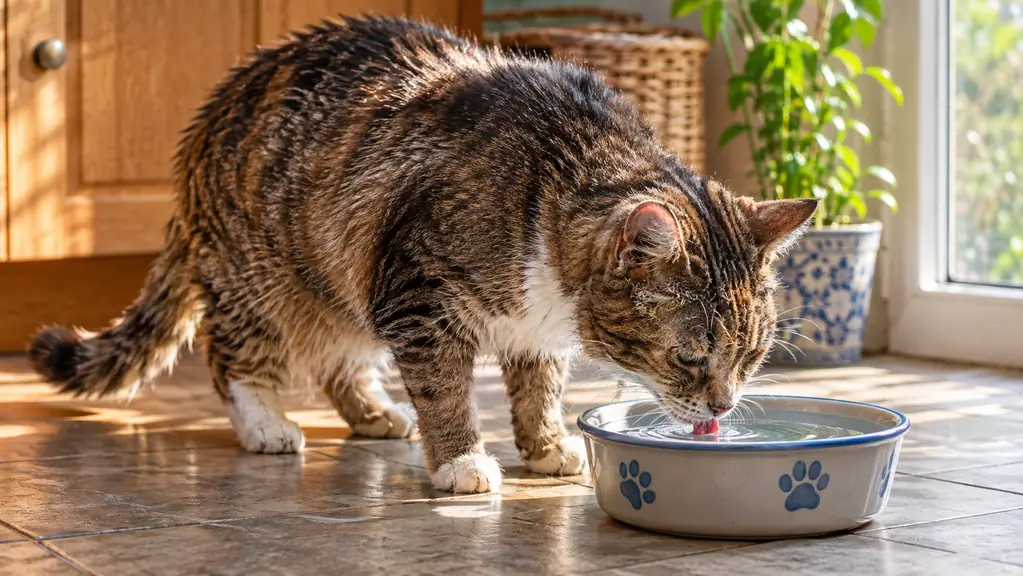
Water first. Our vet has been on me about Pepper's water intake for two years, because Pepper is a picky drinker and a cat who does not drink enough has a whole separate set of problems waiting for her. I keep two bowls now, one in the kitchen and one upstairs, and I change them twice a day. She drinks more from a bowl that has just been refreshed. That is not a product, that is just a fact about my cat.
Meals second. Smaller and more often beat one big bowl for her, and fewer treats beat both. I had been generous with treats because she is old and I love her, and the vet pointed out that I was also making her stomach work harder for no reason at all. That was a hard sentence to hear and a true one.
Third, the boring maintenance the vet keeps listing. Her weight, her teeth, her water. Brushing her a few times a week so less hair travels through her, which is not glamorous and does help. And keeping the house calm, which for us means Ed runs the leaf blower on Saturdays while Pepper is upstairs and not on the kitchen tile wondering what on earth is happening.
If I could say one thing to someone starting this today, it would be to get the vet involved before the first box and not after the third. I nearly did it the other way around. I would have spent three months and a lot of hope on the wrong problem.
One box, one serving a day, one notepad on the fridge
That is the whole routine that took Pepper from a bad week to an ordinary one. Pro Plan Veterinary Diets FortiFlora, thirty servings to a box, with your vet's approval first and four weeks of patience after.
Amazon Check Today's Price on Amazon →