
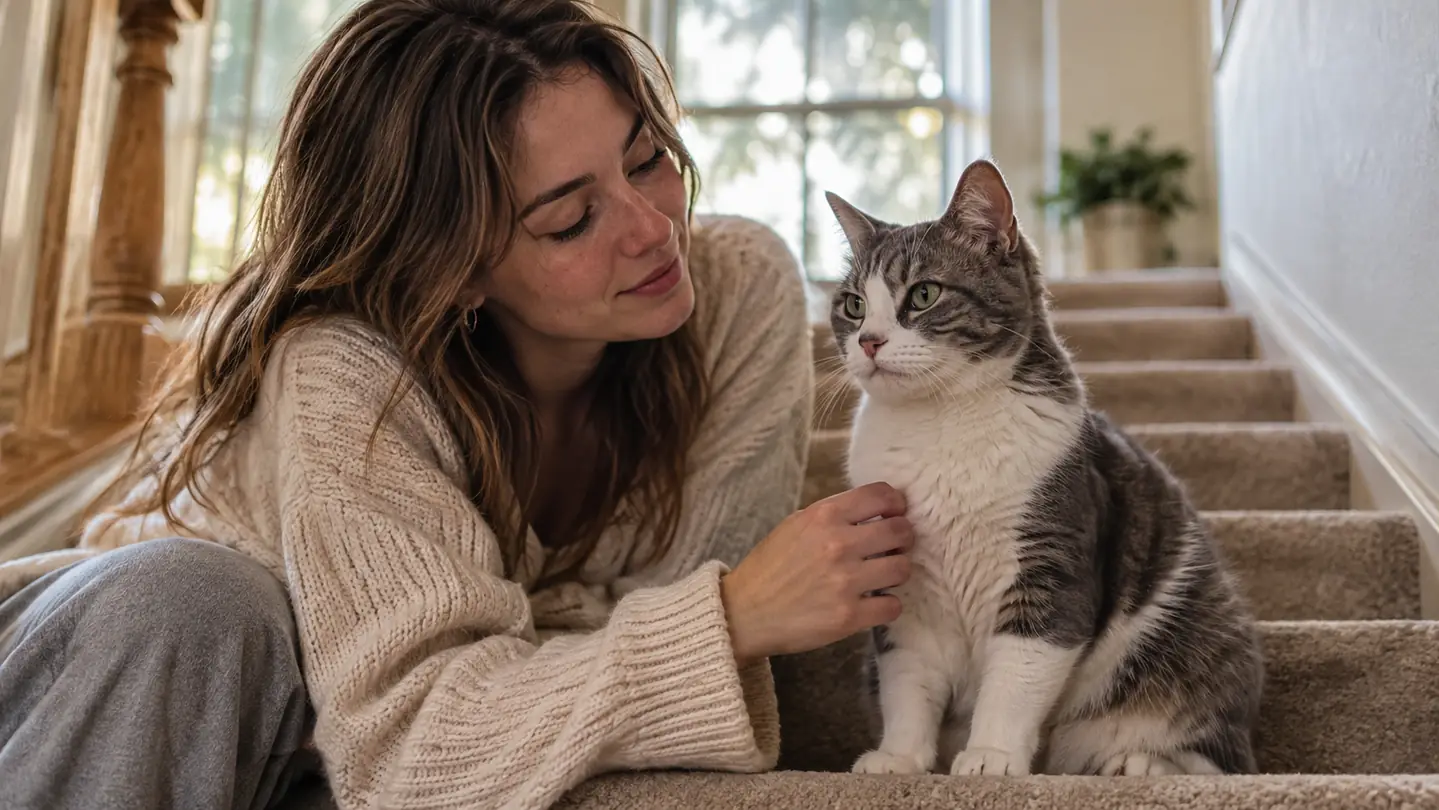
If you have a short-haired cat and you are tired of finding fur on the kitchen counter, here is the short answer. The FURminator does a job a slicker brush cannot do, and a slicker brush does a job the FURminator should not do. I use both on Pepper, my 12-year-old gray-and-white shorthair, and I would not give up either one. But you asked which is better, so I will say it plainly: for a cat that sheds, buy the deShedding tool first, then add a slicker when you can.
Pepper is about 11 pounds, indoor only, and from March through June she sheds like a small gray cloud. Two springs ago I brushed her with a slicker every morning and still swept the stairs every night. Her coat looked nice. The floor did not. That is the whole difference in one sentence: a slicker brush tidies the surface of the coat, and a deShedding tool goes after the undercoat that is already loose and waiting to fall out. Once I understood that, the choice stopped being about brands and started being about which job I needed done first.
| FURminator | Slicker brush | |
|---|---|---|
| What it lifts | Reaches through the topcoat to the loose undercoat | Lifts surface tangles and the loose topcoat hair |
| Coat type it fits | Short hair, sized for cats over 10 pounds | Any coat length, any age, any size of cat |
| Comfort on the cat | Curved edge is shaped to glide over the skin without digging in at the edges | Fine pins on a padded head, and you set the pressure by hand |
| How often | Once or twice a week is plenty | Gentle enough for every day |
| Fur left in the house | Pulls a visible clump out of the undercoat in one sitting | Barely dents the undercoat |
| Getting hair out of the tool | The hair releases from the edge with ease | Pins hold onto it and you pick it out by hand |
| Best job | Shedding season and a heavy undercoat | Daily tidying, legs, tail, and nervous cats |
| In the hand | 5.44 ounces, 8.75 inches long, built for a comfortable grip | Light, but handles vary a lot from brand to brand |
What Each One Actually Does
A slicker brush is probably already in your house. Short wire pins set into a padded head, a handle underneath, and you draw it through the coat. It catches loose topcoat hair, smooths the surface, and lifts small tangles. On Pepper it does her back and her sides well, and she will sit for it as long as I keep the strokes slow and even. It is a finishing tool. There is nothing wrong with that, and I reach for it several times a week.
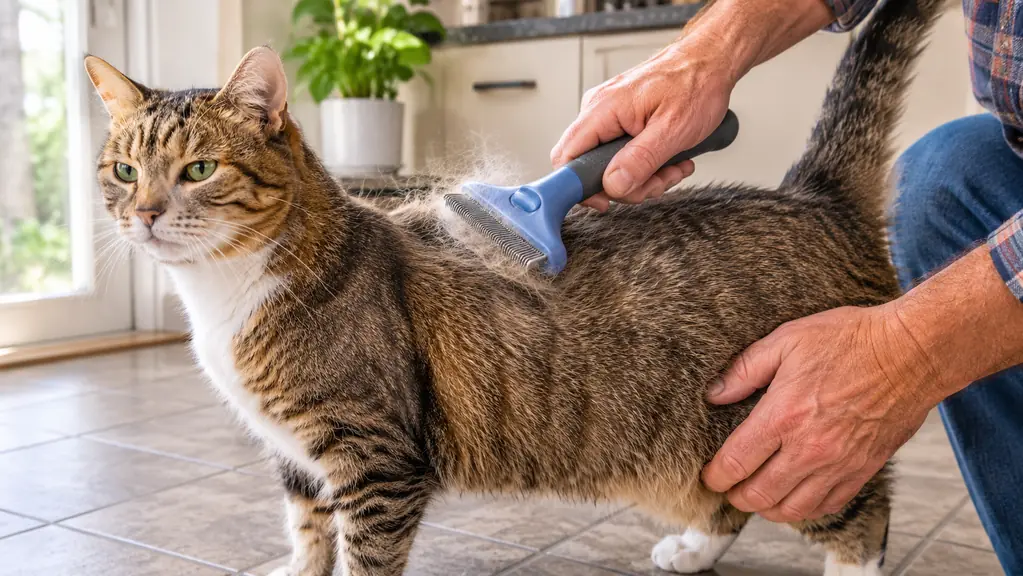
The FURminator is a different animal, so to speak. Instead of pins it has a stainless steel deShedding edge, and the edge is curved. That curve is the whole point. It is shaped to glide over the skin rather than dig in at the corners, it is meant to reach through the topcoat to the loose undercoat, and the listing says it removes that hair without damaging the topcoat. What that feels like in your hand is less like brushing a cat and more like raking out the coat she was about to leave on your stairs anyway.
Size matters more than I expected. This is the medium to large tool, meant for cats over 10 pounds, and Pepper sits right at 11. There is a smaller version for smaller cats and I would get that one for a seven-pound cat without hesitating. Mine is 5.44 ounces and 8.75 inches long, which sounds like a lot of tool for one cat, but the length is what lets me get a full stroke down her back without my hand crowding her shoulders and startling her.
The Shedding Season Test
I keep notes, because I am retired and this is what I do now. Spring of last year: slicker brush, every morning, six to eight minutes, one small puff of hair in the trash each day. Spring of this year: deShedding tool twice a week, five minutes, three full heads of hair the first session and one or two after that. Same cat, same food, same house, same woman doing the brushing. The floor told the story before I did any math.
That first session is the one that surprised me. I went down her back, lifted the tool, and there was a mat of gray fur the size of my palm sitting on the edge. I had already brushed her that morning with the slicker. That hair was not stuck to her. It was loose, sitting in the undercoat, and the pins had gone straight over the top of it. When people say a deShedding tool reaches under the topcoat, that is what they mean, and you can see it the first time you use one.
The catch is that you cannot do that every day. Twice a week is what works here, and in the winter I go two weeks or more without touching it. The slicker covers the in-between days. If I used the deShedding edge daily I would be working on the same coat over and over with nothing left to lift, and Pepper would be within her rights to walk off and sulk under the bed for an hour.
Where FURminator Wins
It wins on volume, and volume is the whole reason you are reading this. The hair it collects is hair you would otherwise find on the stairs, on the couch, on your good black slacks, and in the lint trap. I have not had a hairball on the carpet since I started using it regularly, though I would not claim the tool causes that. I would just say the timing lines up and I am not arguing with it.
It also wins on time and on cleanup. Five minutes twice a week beats six minutes every morning, and the hair releases from the edge with ease, so I am not standing over the trash can picking fur out of tight pins with my fingernails. The curved edge does what the listing says it does, which is glide over the skin. My worry before I bought it was nicking her, and in two years that worry has not been justified once.
Where a Slicker Brush Wins
It wins on anything delicate. Pepper's legs, her chest, the thin coat around her back end: the deShedding edge is too much tool for those places. The slicker is exactly right there, and it is the tool I reach for when she is in a mood. She will sit still for a slicker when she will not sit still for the FURminator, and a cat who walks off mid-stroke leaves you holding a tool and a problem at the same time.
It wins on cats that are not Pepper, too. A kitten, an older cat with thin skin, a cat whose coat mats easily, a cat who flinches when anything touches her back: start with a slicker or a comb and work up from there. And I will say the honest part. A slicker works on any coat length and any size of cat. This deShedding tool is built for short hair and cats over 10 pounds. That is a narrower tool for a narrower job, and there are cats it is simply wrong for.
I had brushed her that morning with the slicker. There was a mat of gray fur the size of my palm sitting on the deShedding edge.
The Tool That Cut the Fur on My Stairs by Half
This is the medium to large deShedding tool for short-haired cats over 10 pounds, which is exactly where Pepper sits. Five minutes, twice a week, is the entire routine.
Amazon Check Today's Price on Amazon →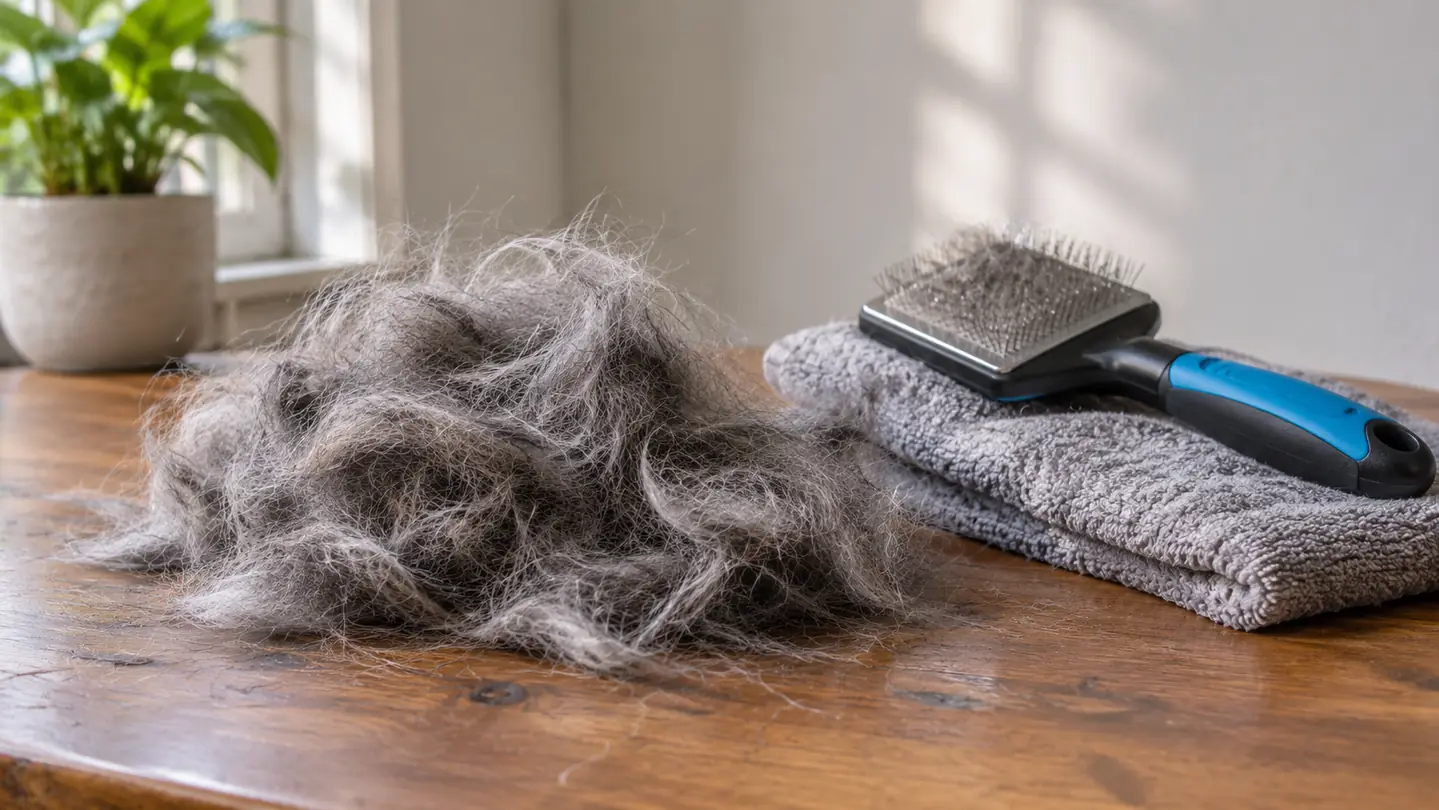
How I Use Both on Pepper
My routine is not clever. Monday and Thursday, after she eats, I take the FURminator and go with the grain from her shoulders toward her tail. Three or four strokes in one spot, then over an inch, then again. I do not press down. The edge does the work, and pressing only makes her twitch and look at me like I have betrayed her over a bowl of kibble.
Then I switch to the slicker for her legs, her chest, and the spot under her chin she cannot reach. That takes two more minutes. She gets a treat after, which Ed says means I have trained the cat to expect a payment for tolerating me. He is not wrong, and I am not stopping.
In shedding season I get a second pile a few days later. In January I get almost nothing, and I put the deShedding tool in the drawer and use only the slicker for a month. That rhythm has held for two years now. It is also why I do not think the question is really one tool against the other. It is which tool you buy in April, when the fur starts flying.
The Other Tool in My Drawer
For the sake of being complete, there is a plain metal comb in the drawer too, the kind with two rows of teeth. I use it on her tail and around her back legs when the slicker starts sliding instead of catching. A comb also tells you the truth about whether a mat is real, because it stops dead when it hits one. It cost almost nothing and I would not be without it, but it is a helper, not the answer to a shedding problem.
What I have not tried is every tool on the shelf, and I would be suspicious of anyone who says they have. What I can tell you is what two years of notes says: one tool takes the loose undercoat out and the other keeps the coat tidy the rest of the week. Everything else in the grooming aisle is a variation on those two jobs.
The Mistakes I Made
I pressed too hard the first time. It is a natural instinct, because with a slicker, pressure is how you get results. With a deShedding edge it just makes the cat unhappy and does not lift any more hair. Light strokes, let the tool do the work, and if nothing is coming up you are either going the wrong direction or there is nothing loose left to lift that day.
I also used it on her legs, which I should not have, and I used it every day for about a week until I noticed one patch looked thinner and asked our vet about it. She told me twice a week, keep an eye on the skin, and stop if it looks pink or irritated. That was sensible advice and I am passing it along. If your cat has any skin problem at all, ask your vet before you start any grooming tool.
Who Should Buy Which
Buy the FURminator first if you have a short-haired cat over 10 pounds, your cat leaves fur on every surface you own, and you are tired of sweeping. That is the exact problem this tool was built for, and it handles it well enough that I stopped noticing the fur for weeks at a time.
Buy a slicker brush first if your cat is small, young, older with thin skin, or nervous about being handled. If she will not sit through a full stroke, start with the gentle tool and work up to the other one over a few months. It is also the better first buy if you are not certain about coat length, since a slicker does not care what kind of coat it is working on.
If you can manage both, do that. I use both every week, and each one has a job the other does not do. The FURminator is the one that changes what is on your floor. The slicker is the one that keeps the peace in this house. I am not giving up either of them, and Pepper would like it noted that she has opinions about both.
Start With the One That Reaches the Undercoat
Sized for short-haired cats over 10 pounds. If your cat is smaller, get the smaller version and keep a slicker for the daily tidying.
Amazon Check Today's Price on Amazon →