
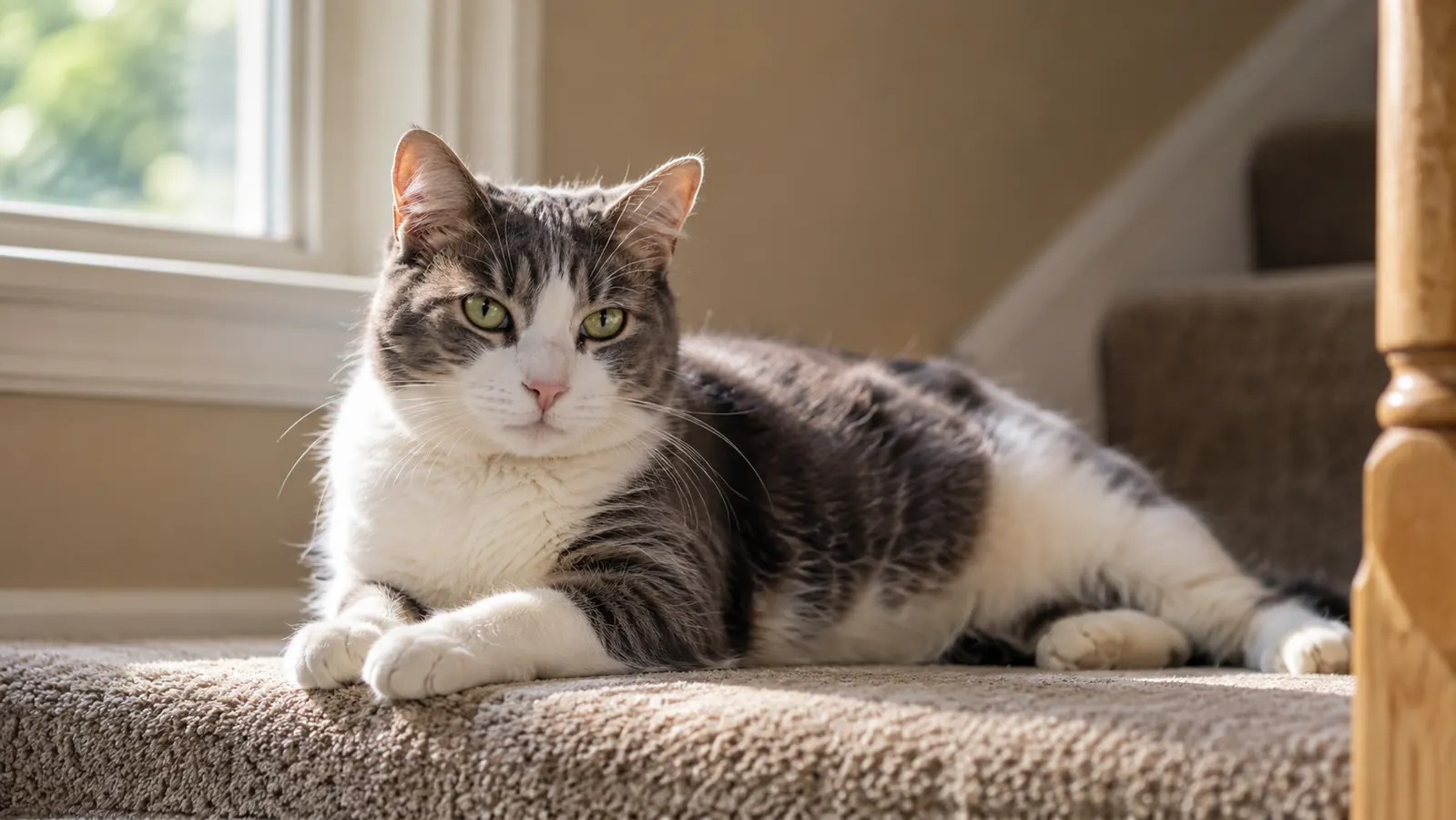
The first time I pulled the FURminator through Pepper's coat, I got a pile of fur roughly the size of a second cat. She is twelve, gray and white, indoor only, about eleven pounds, and she has spent most of those years on the same stretch of upstairs carpet. I had assumed shedding was simply the cost of living with a cat. Two minutes with a stainless steel strip told me I had been wrong for about a decade.
This is not the version of a review where I tell you it changed our lives and you should order one for every room. It is a good tool. It is also narrower in what it does than the listing photos suggest, and there are three or four things I wish somebody had said out loud before I ordered mine. I have been using it on Pepper for about seven months. That is long enough to have opinions, and long enough to have made a couple of mistakes with it that I would rather you skipped.
One thing up front, because it matters. I am not a vet. Nothing here treats a medical problem. Pepper sees our vet for her checkups, and he is the one who told me to watch her weight, her teeth, and how much water she drinks now that she is a senior cat. What I am writing about is grooming, which is the small daily thing I can actually control. If your cat is losing fur in patches, scratching constantly, or has skin that looks angry, close this page and call your vet instead. Seriously. The tool will still be here next week.
The Quick Verdict
A genuinely useful deshedding tool for a short-haired cat over ten pounds, as long as you keep sessions short and stop expecting it to replace brushing, vacuuming, or a vet visit.
Amazon Check Today's Price →Four minutes, twice a week, and the upstairs carpet stopped carrying her coat
This is the exact tool I use on Pepper. It is built for short-haired cats over ten pounds, which is where she lands. Size and weight details are all on the listing if you want to check them against your own cat first.
Amazon Check Today's Price on Amazon →How I Actually Use It
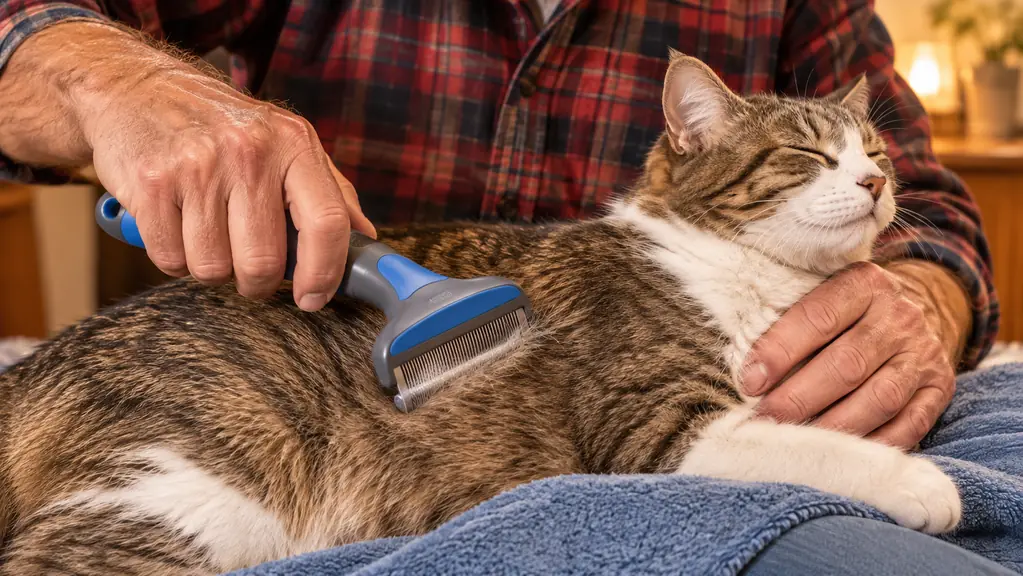
The tool is smaller than I expected. It weighs 5.44 ounces and measures 2 inches by 5 inches by 8.75 inches, so it sits in the hand more like a large comb than a piece of equipment. The edge is curved, which sounds like a line from the packaging until you use it. A straight edge catches at the shoulder and the hip and you feel the cat flinch. The curve follows her shape and glides instead of digging in at the corners.
My routine is boring, and that is the point. I do it on the upstairs carpet, where Pepper already settles, usually in the evening when she is half asleep anyway. I start at her shoulders and work back toward her tail in short strokes, lifting the tool between passes instead of dragging it the whole length of her body. The stainless steel edge reaches through the topcoat and pulls the loose undercoat out, and it comes off in a soft gray sheet. Six minutes is my ceiling. Most nights it is four.
Then I stop, whether or not I think there is more to get. This is the part I got wrong at the start. I kept going because it kept producing fur, and producing fur felt like progress. About three weeks in I noticed a pink patch near her back leg and felt like a fool. Our vet took one look and said the skin was irritated from too much friction, which was entirely my doing. Now I go twice a week, six minutes at most, and I part the fur and look at the skin before I start.
The tool gives you no help with cleanup. The fur builds along the edge in a mat and you peel it off with your fingers into a bag. Do that outside if you can. I did it over the kitchen floor once and Ed found gray fluff in the toaster two days later, and he has not let me forget it.
What I Tried Before This
Before this I had a plain slicker brush and a metal comb, and neither one did much beyond making Pepper's coat look neat for about an hour. The brush moved the loose fur around on top of her. The comb pulled. I also tried one of those mitts you wear on your hand, which she hated with a passion and which mostly collected fur on the outside instead of taking it off the cat. Seven months of the FURminator has done more for the upstairs carpet than two years of everything else combined.
The difference is where the tool works. A brush deals with the surface. This reaches the undercoat, which is where the loose fur actually sits and where it eventually ends up on your floor, your couch, and back inside your cat when she washes herself. Once I understood that, the whole thing made more sense to me. I stopped expecting the brush to do a job it was never built for, and I stopped being annoyed at the brush for it.
What Nobody Tells You First
It is not a brush and it is not meant to be used like one. A brush moves oil around and tidies the surface. This takes the undercoat out. That difference matters because a cat's skin does not need that every day. Twice a week is plenty for Pepper. When I have tried three sessions in one week she gets twitchy about being touched at all, which is its own problem in a house with a twelve-year-old cat who already has opinions about her personal space.
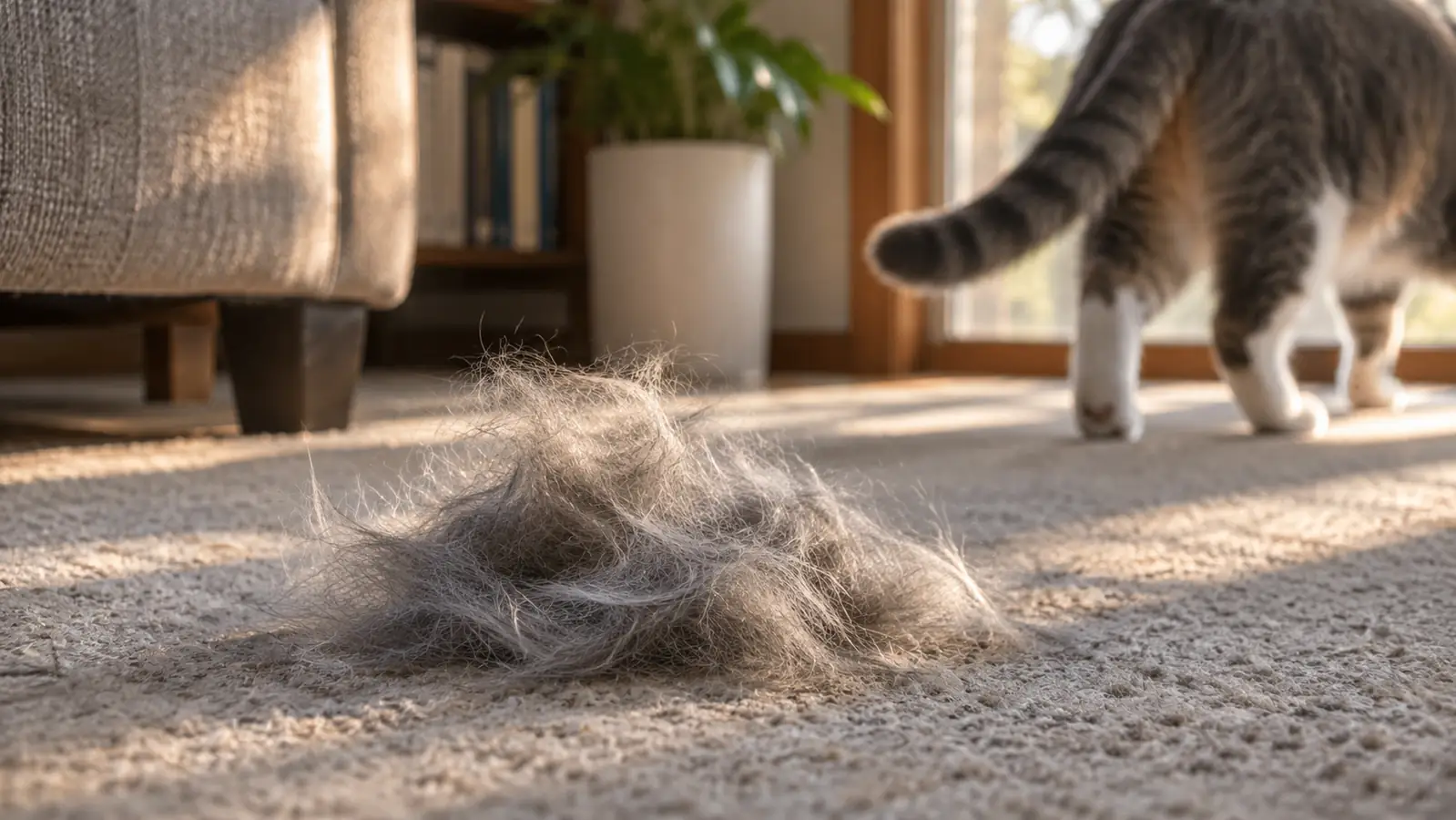
Second, the shedding does not stop. It gets smaller. Before I started, I was vacuuming the upstairs twice a week and still finding fur under the bed. Now I vacuum once and the carpet looks like a carpet. What changed is the volume of loose fur in the house, not the fact that she sheds. Anyone buying this expecting a cat that quits producing hair is going to be disappointed, because that cat does not exist and no tool makes one.
Third, and this one surprised me, the tool is more forgiving than the cat is. Pepper has to be in the mood. If she is not, I get about ninety seconds before the tail starts going, and I have learned to stop and try again tomorrow. You cannot force it with a cat. When I have pushed through, I end up with a cat under the bed for an hour and a tool that did nothing at all. A relaxed cat and four minutes beats a determined owner and ten, every single time.
Six minutes, twice a week, and the fur that comes off Pepper now fits in one hand. The carpet upstairs stopped carrying her coat and the vacuum bag stopped filling up.
The Part That Took Me a While to Understand
This version is built for short hair, and there is a large size meant for cats over ten pounds. Pepper is eleven pounds, so she is right at the line, and the large size fits her. That sizing is not decoration. Too small and you end up making more passes over the same patch of skin, which is exactly the irritation problem I already caused once. If your cat is a big short-haired fellow at fifteen pounds, this is the version that matches him.
If your cat is long-haired, this is the wrong tool and it will grab and pull instead of releasing. That is not a knock on the tool. It is a note about which one you are looking at. A neighbor borrowed mine before I could stop her, because her cat is a fluffy thing and she figured one deshedder was as good as another. She brought it back in four minutes and said it had been a mistake.
The other thing I had to learn is that this is a companion to brushing, not a replacement for it. The tool takes the undercoat out. It does not untangle anything, it does not clear a mat, and it does not deal with the fur around the back end that an older cat sometimes needs help with. I still use a plain brush on Pepper's face and legs, where this thing has no business being. The FURminator does one job well. The mistake is asking it to do the other ones.
Where It Falls Short
You will notice the gaps within the first week, and the main one for me was tidiness. The fur builds along the edge in a mat and you peel it off with your fingers into a bag, and if you are not paying attention you do it over a floor you then have to sweep. Some people will not care about this. I found it mildly annoying for a month and now I do not think about it, but I would be lying if I called the process tidy.
The second shortfall is that it only works where the cat lets you work. Pepper's belly and her back legs have always been off limits. So there will still be loose fur in places you cannot reach, and it will still end up on the furniture. This is a tool for the areas your cat permits, which for us is most of her back and a decent amount of her sides. That is all it is, and it is enough, but nobody should expect more.
The third is that it does not solve a sensitive stomach or a hairball problem on its own, and I want to be careful here. I started paying attention to all of this because Pepper has a delicate stomach and our vet wanted me watching her water intake as she gets older. Less loose fur in the house means less fur going back into her when she grooms herself, and that is the reason I keep the tool by the stairs. But it is one piece of a larger picture that includes what she eats, how much she drinks, and whatever her vet says at the next checkup. Anyone selling a single grooming tool as the whole answer is selling you something.
One more small thing and then I will stop complaining. The tool is heavier than a brush and the edge is metal. If you knock it off the shelf onto a tile floor at seven in the morning, it makes a noise that will wake your husband and half the street.
What I Liked
- Reaches the undercoat on a short-haired cat instead of just tidying the surface
- The curved edge follows the body and does not dig in at the hips and shoulders
- Light at 5.44 ounces, easy to use one-handed on a lap
- Sized for cats over ten pounds, which covers most adult short-haired cats
- Visible drop in loose fur around the house within two weeks
- Seven months in and the stainless steel edge still pulls the same way it did on day one
Where It Falls Short
- Fur builds on the edge and you peel it off by hand, which is messier than it sounds
- Only suitable for short hair, and only for the parts of the cat you can reach
- Very easy to overuse, and too much pressure irritates the skin
- Does not replace a brush, a vacuum, or a vet visit
- Your cat has to cooperate, and no tool fixes a cat who does not want to be touched
The Hairball Question
I get asked about this, so here is what I can honestly say. Pepper used to bring up a hairball every couple of weeks, more often in spring. Since I started the twice-a-week sessions she has gone stretches of a month or more without one, and when it happens it is smaller. I cannot prove the tool did that. She is also eating a different food than she was two years ago and drinking a little more from the fountain in the kitchen. What I can say is that less loose fur in the house means less fur on her tongue when she washes, and that seems like a reasonable thing to pay attention to.
Our vet's take, when I asked, was that grooming helps and is worth doing, and that hairballs which keep coming back are worth a conversation rather than a shopping trip. That has stuck with me. A tool can be a small useful habit in a house, and it can also become a way to avoid calling the vet because you would rather buy something. I have done both. I would rather you did the first one.
What Seven Months Has and Has Not Changed
The upstairs carpet is my honest measure. Seven months ago I vacuumed it twice a week and it still looked like Pepper had been rolling on it, because she had. Now I go once a week and it holds up. The furniture is better but not perfect. My dark sweaters still collect hair, which is just part of living with a cat and not something a metal comb is going to fix.
What has not changed is Pepper, and I mean that in a good way. She still sheds, she still has a sensitive stomach, and she still drinks less than our vet would like. She still decides when grooming happens. The FURminator lives on the shelf by the stairs and comes out when she is in the mood, which is most evenings and almost never on a Sunday. I stopped treating it as a chore to get through and started treating it as a few quiet minutes we spend together. Both of us are better off for that, and the carpet is too.
Who This Is For
This is for the owner of a short-haired adult cat who is tired of the fur and willing to give it four to six minutes twice a week. It suits a cat over ten pounds. It suits a household where the cat is handled regularly and does not mind being touched on the back and sides. And it suits someone who wants one tool that does one job properly rather than five tools that all do a little and none of them well.
It also suits the person who has already tried a regular brush and found that it just moves the fur around. That was me for two years. A brush made Pepper's coat look nice for about an hour. This took a layer out that did not come back, and the difference in the room was obvious by the second week. If that describes you, you are the person this was built for.
Who Should Skip It
Skip it if your cat has long hair. Skip it if your cat is elderly with thin, fragile skin and you are not confident about how much pressure you are using, because a light hand matters more than the tool does. Skip it if you want something that gathers the fur for you, or something that replaces brushing, or something that will handle hairballs without any other changes to how your cat eats and drinks.
And skip it if you are using it as a reason not to call the vet. Losing fur in patches, over-grooming, a change in appetite or water intake, any of that is a conversation to have with a professional rather than a grooming problem to solve with a purchase. Pepper's checkups are the reason I know what to watch for in her at all. The tool is a small good habit. It is not a diagnosis, and it is not a cure.
The one grooming tool that has stayed on my shelf for seven months
If you have a short-haired cat over ten pounds and a carpet that has given up, this is what worked here. Twice a week, six minutes, and a light hand. That is the whole method.
Amazon Check Today's Price on Amazon →